
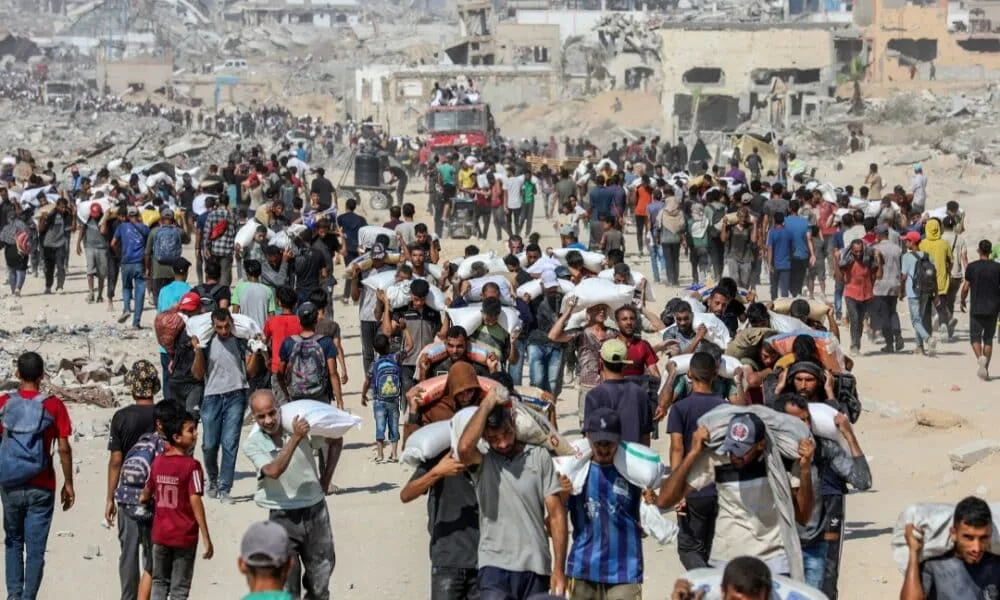

Faixa de gaza – Anas-Mohammed / Shutterstock.com
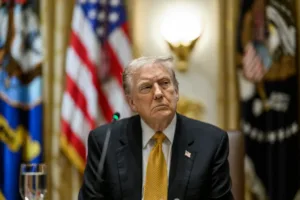
Trump issued a stern statement against Hamas on Thursday, October 16, 2025, after videos of executions in Gaza surfaced on social media. The U.S. president wrote on his platform that the Palestinian group is violating the ceasefire agreement by continuing acts of violence in the territory. The move comes shortly after Israeli Prime Minister Benjamin Netanyahu stated that fighting in the Gaza Strip has not fully ended, despite the truce signed last week.
Trump’s statement follows concerns over compliance with the pact, which requires the return of all hostages, alive or dead, captured on October 7, 2023. Netanyahu, speaking at a Jerusalem ceremony, reiterated Israel’s commitment to recovering the remaining bodies, threatening retaliation if Hamas fails to deliver. Israeli authorities report that only nine of the 28 bodies of deceased hostages have been received so far, with delays attributed by the group to logistical challenges in the war-torn ruins.
The ceasefire agreement, mediated by the United States with support from Egypt, Qatar, and Turkey, outlines clear steps to end the two-year war that resulted in over 67,000 deaths in Gaza, according to local Ministry of Health data. Trump did not specify whether direct U.S. intervention would occur but indicated actions would be taken in coordination with Israel to ensure Hamas’s disarmament. Netanyahu emphasized that any violation would carry a high price, keeping Israeli forces on alert.
Recent violations in Gaza
Videos verified by independent sources show armed men executing individuals at a central Gaza City intersection, breaching ceasefire terms. Hamas claims the actions target rival clans challenging its control in the post-war territory. Israeli authorities label the incidents as displays of force by the group, contradicting its commitment to halt hostilities.
Trump directly addressed the footage, stating such acts violate the agreement and justify firm responses. The president reiterated a prior demand for Hamas’s full disarmament, warning of forceful measures otherwise. Netanyahu echoed the tone, stating at a memorial event that Israel remains vigilant against ongoing threats.
Netanyahu’s statement in Jerusalem
The Israeli prime minister spoke at the Mount Herzl cemetery, marking the second anniversary of the initial Hamas attack. He stressed determination to retrieve all hostages, including the 19 bodies still unaccounted for. Netanyahu warned that fighting has not ended, with defense forces ready to respond to any escalation.
- Commitment to hostage recovery: Israel prioritizes the full return of remains, mediated by the Red Cross.
- Warning against violations: Any hostile act will trigger immediate retaliation, per the prime minister.
- International coordination: U.S. support bolsters Israel’s stance in negotiations.
The event gathered political leaders and victims’ families, reinforcing national unity around security. Netanyahu noted truce progress but highlighted lingering risks of instability in Gaza.
Delays in body returns
Israel’s Defense Forces announced on Wednesday, October 15, the receipt of two more bodies via the Red Cross, bringing the total to nine out of 28 deceased hostages. Forensic exams identified Tamir Nimrodi, Uriel Baruch, and Eitan Levi among those delivered, but one coffin contained remains unrelated to hostages. Hamas claims it has accessed all available bodies, requesting specialized equipment to extract others from the rubble of bombed areas.
Israeli officials dispute this, alleging the group has access to at least 15 to 20 additional bodies. Defense Minister Israel Katz issued a statement demanding immediate compliance, threatening U.S.-coordinated operations if needed. The Red Cross reports logistical challenges, with searches in collapsed areas requiring international rescue teams.
The delay has already impacted the second phase of negotiations, postponed until the issue is resolved. Diplomatic sources indicate Egypt and Turkey are pressing for acceleration to avoid the truce’s collapse.
Hamas’s response to accusations
Hamas’s armed wing, the Ezzedine al-Qassam Brigades, issued a statement claiming partial compliance, delivering all accessible prisoners and bodies. The group cites extensive destruction in Gaza as the main obstacle. A Hamas spokesperson denied intent to violate the agreement but rejected Israel’s demands for immediate disarmament.
In a recent video, Hamas vowed to curb internal anarchy, targeting rival armed clans. Analysts note these moves aim to consolidate authority in the territory amid a post-ceasefire power vacuum. The group insists on a role in Gaza’s transitional governance, opposing U.S.-backed proposals for a technocratic committee.
Israel’s retaliatory measures
Israel ordered the temporary closure of the Rafah crossing, limiting humanitarian aid to Gaza until progress on returns. The decision restricts essential supplies, with only limited vehicles allowed since Monday. The Israeli government justifies the restriction as pressure for full compliance, coordinated with international allies.
Netanyahu instructed the security cabinet to prepare alternative plans, including potential localized combat resumption. Minister Katz reiterated that blatant violations would trigger responses alongside Washington. In exchange, Israel released 1,968 Palestinian prisoners, including those convicted of security offenses, and returned the bodies of 90 Palestinians held in its custody.
The measure drew criticism from humanitarian organizations, warning of a worsening crisis in Gaza, where 67,938 deaths have been recorded since October 2023.
Ceasefire agreement context
The pact, signed last week under U.S. mediation, outlines 20 points to end the conflict that began on October 7, 2023, with a Hamas attack killing 1,219 Israelis. The first phase focuses on exchanging hostages for prisoners and halting hostilities, with a gradual Israeli troop withdrawal. Trump described the plan as a path to lasting Middle East peace, excluding Hamas from Gaza’s governance.
The agreement envisions a transitional committee with Palestinians and international experts, advised by a U.S.-led council. Israel agreed to an initial 1.5 to 3.5 km border pullback, contingent on releases within 72 hours. Despite initial optimism, current impasses test viability, with Trump closely monitoring via envoys like Jared Kushner.
A history of failed truces, like January 2025’s, fuels skepticism, but the release of 20 living hostages signals potential. The deal also expands humanitarian aid, though recent restrictions complicate implementation.
U.S. stance on the impasse
Trump escalated rhetoric, demanding immediate body returns and labeling delays a breach of trust. In a post, the president noted that post-ceasefire violence, like executions, voids Hamas’s commitments. White House aides downplay total collapse risks, attributing delays to Gaza’s devastated terrain.
U.S. sources indicate plans for an international team, including Turks, to aid searches in Gaza. Trump reiterated that disarmament is voluntary or enforced, with Israel halting airstrikes as an initial gesture. The president credits Iran’s weakening, post-authorized strikes, for facilitating the pact.
The U.S. approach balances pressure on Hamas with support for Israel, aiming for a stable Gaza transition without the group’s presence.