




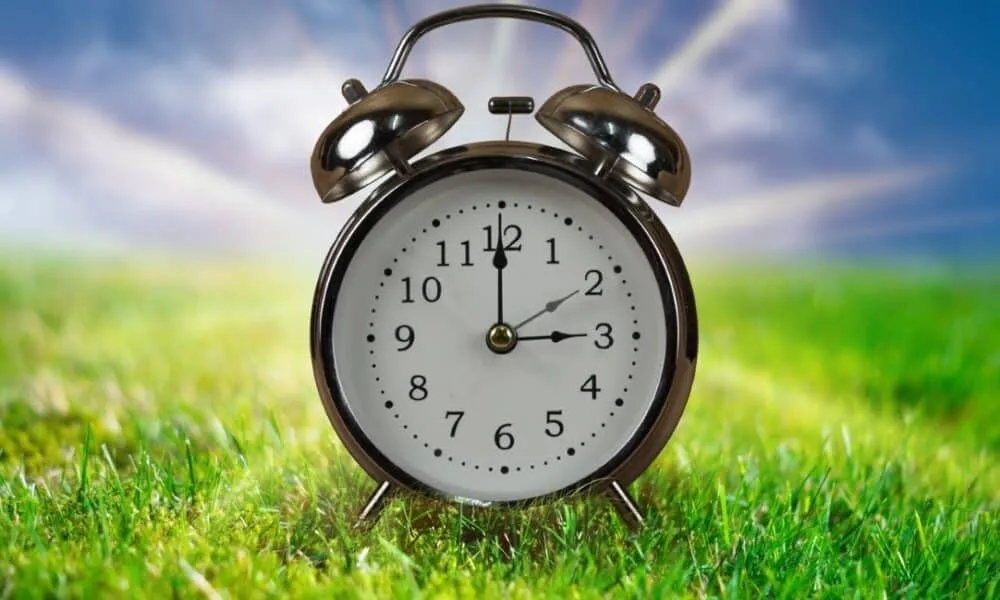

horário de verão, relógio – Foto: Jens Domschky/iStock.com
The European Commission renewed its call to end daylight saving time amid the annual transition to winter time, scheduled for this Sunday across the continent. Implemented in the 1970s to save energy during the oil crisis, the practice faces growing criticism for its impacts on health and road safety. In Brussels, Transport Commissioner Apostolos Tzitzikostas stated it is time to eliminate the biannual change, backed by a 2018 public consultation where 84% of 4.6 million participants opposed the practice.
The European Parliament approved the abolition in 2019, with an initial target for 2021, but the process stalled due to a lack of agreement among the 27 member states. Countries like Spain and Poland are now driving discussions, while the Commission requests a new technical assessment to break the deadlock.
- 84% of respondents in 2018 rejected the time change;
- Current energy savings estimated at just 0.5% of total consumption;
- 6% increase in traffic accidents in weeks following the change, per European studies.

Origins of daylight saving time in Europe
The practice emerged in the 1970s in response to the global energy crisis, aiming to extend daylight use and reduce electricity consumption. At the time, Europe heavily relied on imported oil, and the measure sought to optimize peak lighting hours.
Countries like Germany and France quickly adopted the system, harmonizing dates in 1980 through a community directive. The transition occurs on the last Sunday of March, advancing one hour, and the last Sunday of October, reverting by one hour.
Health impacts of time changes
Studies show the change disrupts circadian rhythms, affecting sleep in up to 30% of the population in the following days. Symptoms include fatigue, irritability, and reduced workplace productivity, with reports of a 5% rise in heart attacks in the weeks after the shift.
World Health Organization research highlights hormonal imbalances caused by the adjustment, particularly in the elderly and children. The Commission cites these findings to justify the urgency of the review, noting that current energy savings do not outweigh the risks.
The transition to winter time, set for October 26, 2025, may exacerbate these effects in regions with long winters, like Scandinavia and Eastern Europe. Health authorities recommend gradual adjustments, such as morning exposure to natural light, to mitigate impacts.
Stances of member states
Spain announced a formal proposal to abolish the change in 2026 during the October 20 energy ministers’ meeting, led by Prime Minister Pedro Sánchez. The argument focuses on the measure’s obsolescence, given LED lighting has cut savings by 90% since the 1970s.
Poland, holding the EU presidency until July 2025, plans informal consultations with member states to revive the debate. However, nations like Italy and Portugal advocate retention, citing benefits for tourism and agriculture.
Lithuania, set to assume the presidency in 2027, will prioritize the issue, supported by 67 MEPs who signed a recent petition. The European Council is expected to discuss options, including permanent adoption of winter or summer time by country.
Geographic divergence complicates consensus: the EU’s three time zones—Western, Central, and Eastern—could create trade disruptions without uniformity. Analysts predict a qualified majority vote in the Council could resolve the issue by 2026.
Legislative deadlock and next steps
Directive 2000/84/EC has regulated time changes since 2001, requiring unanimous approval for amendments. In 2019, the Parliament voted in favor of the Commission’s proposal, but the Council requested further impact assessments, delaying implementation.
Tzitzikostas pledged to mediate negotiations, highlighting unanimous support from political groups in the current Parliament. A new analysis, commissioned in October 2025, will assess economic and sectoral costs, including aviation and transport.
The Strasbourg debate gathered MEPs from all spectrums, increasing pressure on national governments. Spain plans to trigger the review mechanism at the Energy Council, aiming for a decision before the March 2026 transition.
Future options for the continent
Each member state could choose permanent winter or summer time, but without coordination, the single market could fragment. Northern countries like Finland favor winter time to align with the solar cycle, while southern ones like Greece prefer summer time to extend working hours.
Economic studies indicate minimal losses, below 0.1% of GDP, in transition scenarios. The Commission stresses that abolition would align the EU with global trends, as 40% of countries have already eliminated time changes.