


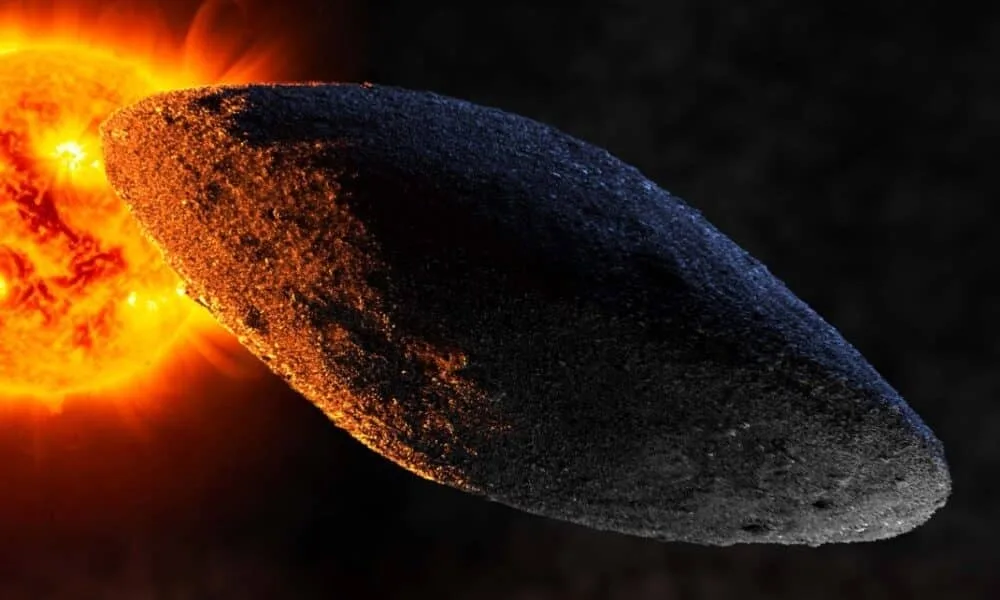

Cometa – Giovanni Cancemi/Shutterstock.com
Interstellar object 3I/ATLAS reveals network of seven jets in images captured at 04:10 UT on November 8, 2025. Astronomers M. Jäger, G. Rhemann and E. Prosperi obtained a series of stacked photos that show complex structure. The comet, positioned at 29° altitude, exhibited multiple streams of ejected material.
The observation took place under specific night sky conditions. The researchers used stacking techniques to highlight faint details. The discovery alters previous views on the object’s activity.
- Seven distinct jets appear aligned.
- Ejected material forms symmetrical patterns.
- Processed images highlight gas and dust emissions.
🚨 New: 3I/ATLAS reveals a network of seven jets not one, not two but seven.
At 04:10 UT, Nov 8 2025, astronomers M. Jäger, G. Rhemann, and E. Prosperi captured a new series of stacked images of the interstellar object 3I/ATLAS and what they saw changes everything.
At just 29°… pic.twitter.com/9aWJm0Ehi6
— Skywatch Signal (@UAPWatchers) November 8, 2025
Capture techniques employed
Astronomers applied image stacking method to increase sharpness. Each individual frame captured subtle emissions from the comet.
Full exposure allowed us to visualize structures that do not appear in single photos. High sensitivity equipment recorded variations in brightness in the jets.
Structure of observed jets
Seven streams of material exit the 3I/ATLAS core. The jets have varying lengths and specific directions.
Two main jets extend greater distances than the others. The smaller flows connect to the central region of the object. The configuration forms an interconnected emissions network.
Observation conditions
The comet was 29° above the horizon at the time of capture. The universal time of 04:10 UT favored visibility in selected locations.
Astronomers have positioned telescopes in places with low atmospheric turbulence. The low altitude required precise optical corrections.
Jet Network Implications
The presence of seven jets indicates intense activity in the nucleus. The interstellar object ejects material in multiple directions simultaneously.
Asymmetric structures suggest irregular rotation of the comet. The jets reveal a volatile composition rich in gases.
Details of researchers involved
M. Jäger, G. Rhemann and E. Prosperi collaborated on the observational session. Each astronomer contributed specialized equipment.
The team processed data in real time to validate the findings. The series of images undergoes additional analysis in laboratories.
Emission patterns identified
The jets form specific angles to each other. Adjacent flows interact optically.
- Central jet emits with greater intensity.
- Side pairs show partial symmetry.
- Peripheral emissions connect main structures.
- Patterns vary in brightness over time.
The complete network covers an extensive area around the core. Future observations will monitor developments in flows.