
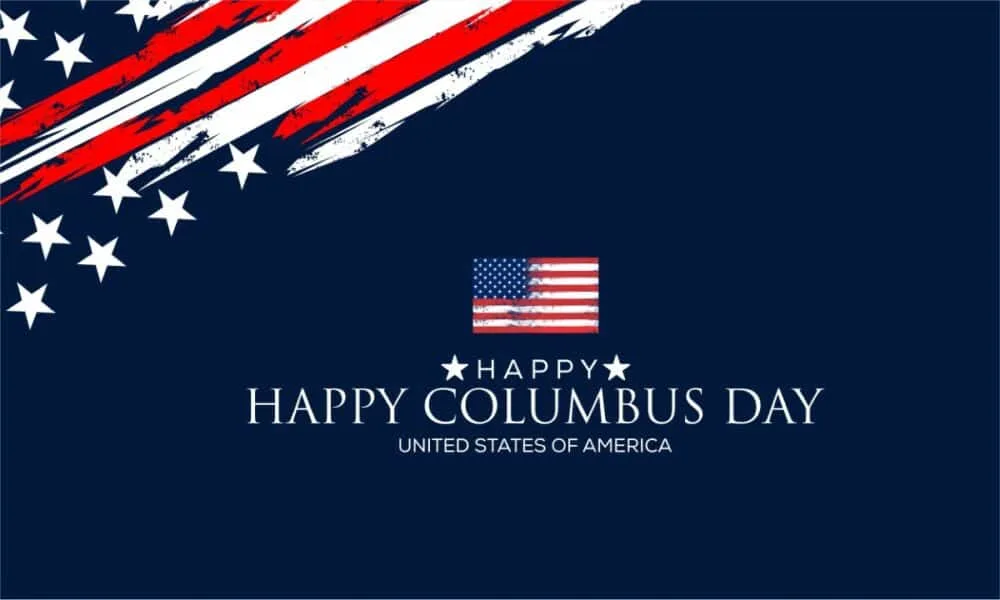

Columbus Day – Foto: mangeddie46/Shutterstock.com
The Columbus Day holiday, observed on the second Monday of October, is formally maintained as a federal date in the United States, mandating the closure of most federal services, including post offices and banks. However, its observance generates significant controversy and variation across the country. The date, which in 2025 falls on October 13, officially marks Christopher Columbus’s arrival in the Americas in 1492. Nevertheless, the historical recognition of the Italian navigator has been widely contested due to the devastating impact of colonization on Native populations.
This historical tension has fueled the rise of Indigenous Peoples’ Day, which is celebrated on the same date and is gaining significant traction in states and municipalities. In a movement of historical reinterpretation, over 200 cities, including major urban centers, have officially recognized Native communities. The debate over which observance should prevail reflects a profound discussion about the nation’s past, values, and identity.
Growing Wave of Local and State-Level Replacement
Columbus Day, instituted as a national holiday in 1937, is today one of the most inconsistently celebrated federal holidays in the country. Currently, more than 18 states and approximately 200 cities have either replaced or officially recognize Indigenous Peoples’ Day instead. This massive adoption reflects a grassroots effort to correct a historical injustice.
Pioneering cities like Berkeley, California, began the movement in 1992, marking the 500th anniversary of Columbus’s arrival with a recontextualization of the date. South Dakota had already replaced the celebration with “Native American Day” in 1990. More recently, large cities such as Los Angeles, Portland, and Boston have joined the trend. The District of Columbia also recognizes Indigenous Peoples’ Day.
- States that formally no longer celebrate Columbus Day include: Alaska, Hawaii, Iowa, Louisiana, Maine, Michigan, Minnesota, New Mexico, Oregon, South Dakota, Vermont, Washington, and Wisconsin.
- Indigenous Peoples’ Day serves to highlight the inherent sovereignty of Native American nations and the invaluable contributions of Indigenous peoples to American culture.
Acrimonious Political Debate and the Role of the Federal Government
The polarization surrounding the holiday has reached the highest levels of the federal government, fluctuating with each administration. In 2021, the then US President issued the first presidential proclamation recognizing Indigenous Peoples’ Day alongside Columbus Day, a landmark moment in American history. However, in 2025, the federal government chose not to acknowledge the alternative date, issuing a proclamation for Columbus Day instead, celebrating him as an “original American hero” and reaffirming the value of Italian-American heritage.
The dispute signals a profound division that transcends the mere celebration of a holiday. On one side, there is an appeal to maintain a tradition that values European exploration and the contributions of Italian immigrants. On the other, there is a cry for social justice and the inclusion of the historical perspective of Native peoples, who suffered the impacts of colonization. The federal decision to revert to an exclusive focus on Columbus Day sharply contrasts with the increasing trend of adopting Indigenous Peoples’ Day at the state and municipal levels.
Practical Implications on October 13
For citizens, October 13, 2025, presents a patchwork of operations. While federal services, such as the USPS, halt regular delivery activities, and bank branches close, the private sector largely operates as normal. Retail stores, the stock market, and private delivery services like UPS and FedEx do not adhere to the federal holiday.
The confusion regarding operations reflects the lack of uniformity in the celebration. Many state and local governments, by adopting Indigenous Peoples’ Day, keep their offices open. This disparity forces citizens to locally verify which services and schools are operating. The situation is a clear indicator that the meaning of the date is being actively renegotiated in legislative forums, educational institutions, and on city streets.
Historical Reflection and the Future of National Symbols
The debate extends beyond the choice of a name for the holiday. It addresses how the United States chooses to tell its own history. The movement for Indigenous Peoples’ Day is intrinsically linked to a broader effort to dismantle symbols of oppression, evidenced by the removal and vandalism of Christopher Columbus statues in several cities in recent years. These actions are direct manifestations of the repudiation of what is perceived as the glorification of genocide.
The October holiday has become a cultural battleground, forcing society to confront the history of violence and displacement against Natives. By celebrating Indigenous Peoples’ Day, the nation acknowledges the pre-Columbian history and the ongoing struggle of tribal nations for self-determination and the preservation of their cultures. The shift in focus is a crucial step towards a more honest and inclusive recognition of the American past and present, promoting education about the First Nations, their languages, knowledge systems, and resilience. The trend of municipal and state adoption suggests that the advance of Indigenous Peoples’ Day is a long-term movement, promising to permanently alter the civic calendar, regardless of the federal stance.
5 Principal Keywords: