

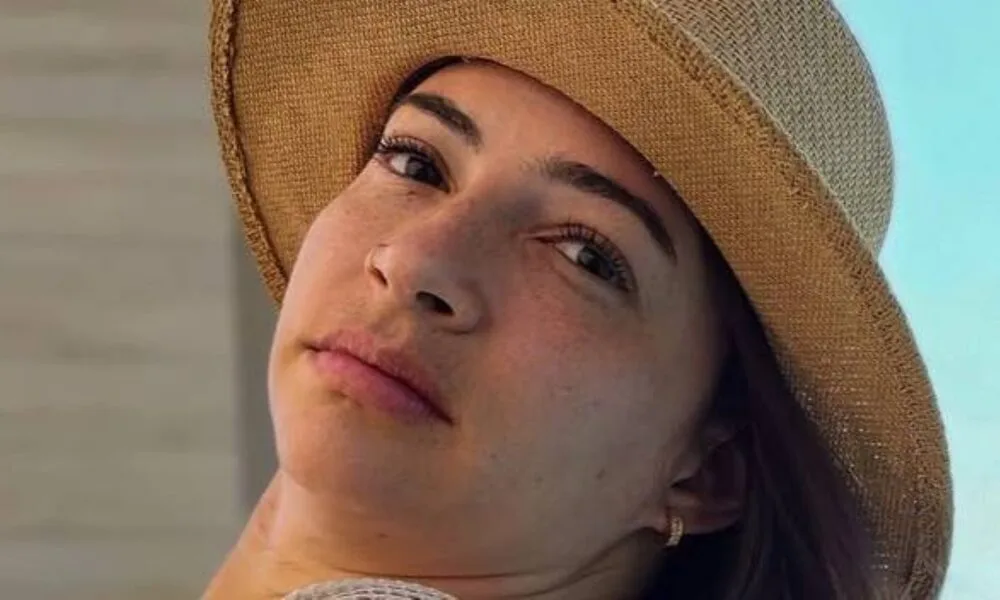

Lais Souza – Foto: @lalikasouza
Former gymnast Laís Souza, 36, felt her left pinky finger for the first time since a 2014 accident left her tetraplegic. The moment, captured by chance in a video with her partner, marked a faint sensation of pressure and tingling. In an interview with g1, she shared details of her daily routine, which includes physiotherapy, lectures, and studying scientific advancements. The discovery fuels her hope in future therapies for spinal cord injuries.
The sensation, estimated at 3% to 5%, was not medically assessed, but Laís believes minor improvements are possible years later. The moment was recorded spontaneously during a casual interaction. “I asked her to press the finger multiple times, fearing the sensation would fade,” she said.
- The sensation felt like pressure and tingling, rare after 11 years.
- Laís follows studies on nerve regeneration, including work from Tel Aviv University.
- She maintains a strict routine to prepare for potential future treatments.
The athlete, who represented Brazil in two Olympics, organizes her life meticulously to prevent health complications.
Daily care routine
Laís Souza follows a timed routine, with morning care, afternoon physiotherapy, and lectures. “My house runs like a company,” she states. Every item has a designated place to streamline her day.
She trains caregivers to spot signs like marks or clothing folds that could cause sores. “If I miss the timing, my body responds with infections or fever,” she explains.
Trauma and safeguards
Laís disclosed abuses endured during rehabilitation, prompting her to install home cameras. She avoids male caregivers for intimate tasks due to past trauma.
“I explain every move and keep everything under control,” she says. Trust, shaken by vulnerable moments, is now built on strict protocols.
Research and hope
Laís tracks studies on nerve regeneration, such as Brazil’s polylaminin research and Israel’s 3D spinal cord project. “I want to be ready if movement returns,” she says. She studies neuroplasticity and joins groups monitoring experimental therapies.
Her reading covers the nervous system and healing processes. “I have hope but avoid expectations,” she notes. Her physical preparation focuses on future treatment possibilities.
Accessibility barriers
Outside her home, Laís faces accessibility issues. Restaurants without ramps and stores with narrow doors hinder her mobility. “Sometimes I stay in the car and ask someone to buy for me,” she says.
These barriers led her back to painting, an activity that echoes the satisfaction of sports. “Finishing a piece feels like an adrenaline rush,” she explains. Her vibrant, figurative guache artworks reflect her creativity.
Her introspection also sparked scientific curiosity, driving her to study her condition and potential treatments.
Lectures and resilience
Laís has delivered over 200 lectures on inclusion and workplace safety. “I speak from the heart, no script,” she says. Despite being seen as a symbol of resilience, she emphasizes her human side.
“Some days, I just want to lie down,” she admits, highlighting the reality of her routine.
The life-changing accident
On January 27, 2014, Laís crashed into a tree during an aerial skiing practice in the U.S., just before the Sochi Winter Olympics. The impact fractured her C3 and C4 vertebrae, damaging her spinal cord.
She recalls little, only flashes of fainting and breathing difficulties. The severity hit when she couldn’t hold her phone days later.
Despite an initial prognosis of machine dependency, Laís defied expectations. Her mother, a constant presence, performs nighttime checks and adjustments.
The former gymnast remains mentally strong. “My biggest muscle is my brain,” she says, emphasizing her commitment to learning and preparing for the future.