



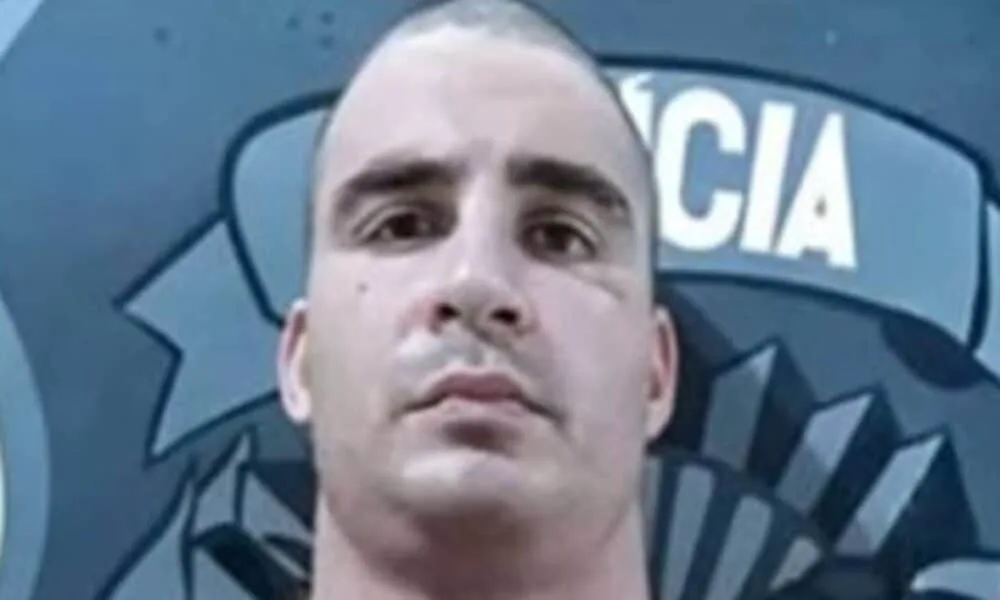

igor cabral – Foto: Reprodução/Redes Sociais
On July 26, 2025, Igor Eduardo Pereira Cabral, a 29-year-old former basketball player, brutally attacked his girlfriend, Juliana Garcia dos Santos, with 61 punches inside an elevator in a luxury condominium in Ponta Negra, Natal, Rio Grande do Norte. The crime, recorded by security cameras, shocked the nation due to its extreme violence and prompted the Justice Department to accept, on August 7, the Public Prosecutor’s Office’s charges, making Cabral a defendant for attempted femicide. The 35-year-old victim suffered multiple facial fractures and underwent facial reconstruction surgery. The case, driven by jealousy, reignited debates about domestic violence in Brazil. Cabral’s preventive detention was upheld, and he remains in custody at the Dinorá Simas Public Prison in Ceará-Mirim.
The assault followed an argument during a barbecue at the condominium when Cabral demanded to see Juliana’s phone. Despite her assurance that there was nothing compromising, he threw the device into the pool and, enraged, went to her apartment to retrieve his belongings. Juliana followed, fearing she would be attacked out of the cameras’ reach, and stayed in the elevator, where the assault occurred.

- Security cameras: recorded 61 punches in 35 seconds, with Juliana unable to react.
- Immediate arrest: residents and the doorman restrained Cabral, who was detained by the Military Police.
- Victim’s condition: Juliana suffered fractures in her jaw, nose, and facial bones, requiring surgery.
The doorman’s swift action, calling the police after seeing the footage, was crucial for Cabral’s immediate arrest, which was converted to preventive detention the next day.
National outrage and public response
The video of the assault, which went viral on social media, sparked widespread outrage across the country. The brutality of the attack, with Juliana receiving relentless punches while trying to protect herself, led to mobilization by feminist movements and civil society. An online fundraiser collected over R$70,000 to cover Juliana’s medical expenses, and she was discharged from the hospital on August 4, though she remains in recovery.
The victim’s lawyer, Caroline Mafra, emphasized the importance of the elevator footage as irrefutable evidence of the crime. In an interview, she stressed that the case highlights the need for better protection for domestic violence victims. The Justice Department, while upholding Cabral’s preventive detention, denied an additional protective measure for Juliana, arguing that the aggressor is detained, a decision criticized by activists.
- Social mobilization: thousands of support messages for Juliana flooded social media.
- Public debate: the case reignited discussions about gender-based violence in Brazil.
- Visual evidence: the elevator footage was pivotal for the accepted charges.
- Criticism of the Justice system: the denial of additional protective measures was questioned by feminist groups.
The backlash also affected Cabral’s family, who reported threats and vandalism at a commercial property linked to them, prompting the defense to issue a statement asking for respect for family members unrelated to the crime.
Custody hearing and Cabral’s statements
During the custody hearing on July 27, Cabral claimed he suffered a “claustrophobic episode” in the elevator and admitted to using illicit substances on the day of the crime. He alleged he requested police and an ambulance after the attack, but the footage and Juliana’s statement contradict his version, indicating he was only restrained by residents. In a handwritten note to the police, Juliana reported that Cabral threatened to kill her and that she stayed in the elevator knowing she would be attacked out of the cameras’ reach.
The former basketball player, who once played for Brazil’s 3×3 basketball team, also stated in his testimony that the argument began over jealousy triggered by messages on Juliana’s phone. The case’s lead investigator, Delegate Victória Lisboa, noted that the couple’s relationship already had a history of violence, including intimidation and verbal abuse.
Victim’s surgery and recovery
Juliana Garcia dos Santos underwent facial reconstruction surgery at the Onofre Lopes University Hospital in Natal on August 1. The procedure, led by dental surgeon Kerlison Paulino de Oliveira, aimed to restore the form and function of her face, severely damaged by fractures in her jaw, nose, cheek, and around her eyes. Despite the surgery’s success, Juliana faces a long recovery process with potential physical and psychological sequelae.
- Severe injuries: multiple facial fractures compromised her bone structure.
- Complex procedure: the surgery involved restoring facial bones and tissues.
- Psychological support: Juliana is receiving counseling to cope with the trauma.
- Community support: the online fundraiser reflects widespread solidarity for her recovery.
The hospital reported that Juliana was discharged on August 4 but still requires intensive care. Friends and family have rallied to provide emotional and financial support.
Allegations of prison assault
Cabral, transferred to the Dinorá Simas Public Prison in Ceará-Mirim, reported on August 1 that he was assaulted by prison officers. He claimed he was placed in an isolated cell, handcuffed and naked, and subjected to punches, kicks, elbows, and pepper spray. He further alleged that officers threatened him, saying he had “arrived in hell” and suggesting he take his own life. The Rio Grande do Norte Secretariat of Penitentiary Administration (Seap) is investigating the claims, with the Prison System’s Internal Affairs Office analyzing potential misconduct.
Cabral’s defense had requested a private cell for safety reasons, but the request was denied due to the prison’s lack of infrastructure. Nonetheless, he was placed in a secure wing, isolated from other inmates, following the assault allegations. The investigation continues, with forensic examinations conducted to verify the claims.
- Cabral’s allegations: assaults included pepper spray and psychological threats.
- Seap’s response: an investigation was launched to probe the officers’ conduct.
- Temporary isolation: Cabral was placed in a secure wing but not in a private cell.
Gender-based violence in Brazil
The case of Juliana and Cabral has once again exposed the severity of violence against women in Brazil. In 2024, the country recorded 1,400 femicides, according to the Brazilian Public Security Forum, with Rio Grande do Norte among the states with high rates of domestic violence. The Femicide Law, enacted in October 2024, classifies the crime as a distinct offense with penalties of up to 40 years, strengthening measures against cases like the one in Natal.
Organizations like the Casa da Mulher Brasileira in Natal advocate for increased investment in support and prevention centers. The public’s response, including the fundraiser and messages of support, demonstrates societal solidarity but also underscores the need for more effective public policies. Lawyer Caroline Mafra emphasized that the elevator footage was critical in preventing the crime from being downplayed, highlighting the importance of visual evidence in domestic violence cases.
- Alarming data: 1,400 femicides in 2024 underscore the issue’s severity.
- New legislation: the Femicide Law imposes harsher penalties for gender-based crimes.
- Prevention needs: activists call for more resources for support centers.
- Visual evidence: security cameras are crucial in domestic violence cases.
Judicial process and next steps
The acceptance of the charges against Cabral by the Public Prosecutor’s Office marks the start of a trial that is proceeding under judicial secrecy to protect the victim. He will face charges of attempted femicide under Article 121-A of the Brazilian Penal Code, which carries severe penalties for gender-based violence. His preventive detention, with no set release date, was upheld due to the crime’s severity and the defendant’s dangerousness.
Cabral’s defense, led by lawyer Carlos Almeida, stated it is awaiting the next steps to present its strategy. In a statement issued on August 4, Cabral apologized, claiming his actions were influenced by “substance use and emotional instability.” The statement, however, was met with skepticism by feminist groups demanding strict justice.
- Ongoing trial: the case is under judicial secrecy to protect Juliana.
- Preventive detention: upheld due to risks to the victim and society.
- Cabral’s defense: cites emotional context but faces public criticism.
- Social pressure: feminist movements demand exemplary punishment.
The case continues to fuel debates about gender-based violence and the Brazilian prison system, with the public closely following the judicial developments and Juliana’s recovery.